Stadium Icons: Elevating Your Digital Sports Experience
In the rapidly evolving landscape of digital design, the visual representation of location and venue plays a pivotal role in user engagement. For developers, designers, and content creators working on sports-related applications, finding the right imagery is often the difference between a functional interface and an immersive experience. This is where Stadium Icons become an essential asset. These are not merely decorative images; they are strategic design elements that communicate information instantly, guide user navigation, and establish a professional aesthetic for mobile and web applications.
Whether you are building a ticketing platform, a live-score aggregator, or a fan community app, the need for high-quality vector graphics is paramount. The challenge often lies in balancing visual appeal with technical performance. Low-resolution images can blur on modern high-density screens, while poorly designed vectors can slow down load times. A comprehensive solution like the Stadium Icons collection addresses these pain points by offering scalable, crisp, and versatile assets tailored specifically for the sports industry.
The Critical Role of Visual Assets in Sports Applications
When users open a sports application, their primary goal is usually immediate access to information: game schedules, team standings, or ticket availability. In this context, cognitive load must be minimized. Users should not have to decipher what a graphic represents; it should be instantly recognizable. Stadium Icons serve as universal symbols that bridge the gap between complex data and intuitive understanding.
Consider the scenario of a fan browsing a list of upcoming matches across different cities. Without distinct, recognizable icons, the list becomes a wall of text that requires significant effort to scan. By integrating a specific stadium icon next to each event, the application provides a visual anchor. This small detail enhances the user experience (UX) by allowing fans to quickly identify their home ground or a rival venue at a glance. The effectiveness of these icons relies heavily on their clarity and consistency, which is why vector-based solutions are preferred over raster images.
Overcoming Design Challenges with Vector Technology
One of the most common challenges faced by web and mobile developers is maintaining image quality across various devices. Smartphones today boast retina displays with incredibly high pixel densities, while desktop monitors vary from standard HD to 4K resolution. Raster images, such as JPEGs or low-resolution PNGs, often suffer from pixelation when scaled up, leading to a jagged, unprofessional appearance.
This is where the technical superiority of Stadium Icons comes into play. As vector design elements, these graphics are mathematically defined rather than pixel-based. This means they can be scaled to any size—from a tiny favicon on a browser tab to a massive hero banner on a billboard-sized screen—without losing a single bit of clarity. The ability to scale infinitely ensures that your application looks pristine on every device, from the smallest smartwatch to the largest tablet.
Furthermore, file size optimization is a critical concern for mobile applications where bandwidth and storage are limited. Vector formats like SVG allow for lightweight files that load quickly, contributing to better Core Web Vitals scores and improved search engine rankings. When you choose a resource that includes high-resolution options alongside scalable vectors, you gain the flexibility to optimize for both speed and visual fidelity.
Practical Applications and Implementation Strategies
The versatility of the Stadium Icons collection makes it suitable for a wide range of practical applications beyond simple decoration. Here are several ways professionals can leverage these assets to achieve their goals:
- Interactive Maps and Navigation: For apps that help fans find parking, entrances, or concessions within a venue, clear stadium icons act as crucial waypoints. They provide immediate context on maps, reducing confusion and improving the physical flow of crowds.
- Event Calendars and Schedules: Integrating these icons into calendar views allows users to visually distinguish between different venues. This is particularly useful for leagues with multiple stadiums or for users tracking teams that play in neutral locations.
- Social Media and Marketing Campaigns: High-resolution assets are invaluable for social media graphics, email newsletters, and promotional banners. The ability to use transparent backgrounds ensures these icons blend seamlessly with any brand color palette or background image.
- E-commerce and Ticketing Platforms: On checkout pages or product listings, a recognizable stadium icon reinforces the purchase decision, reminding the user exactly where the experience will take place.
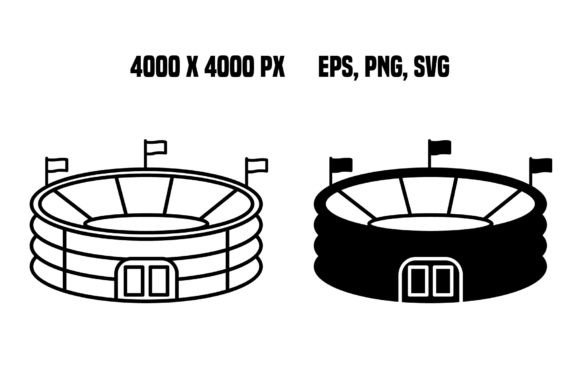
Implementing these icons is straightforward due to the variety of formats provided. The inclusion of EPS, PNG, and SVG files caters to different workflows. Graphic designers working in Adobe Illustrator or InDesign can utilize the EPS files for print materials or further editing. Web developers can drop the SVG files directly into HTML code or CSS, ensuring perfect rendering. Meanwhile, the high-resolution PNGs (300 dpi, 4000 x 4000 pixels) offer a ready-to-use option for presentations, marketing decks, or scenarios where vector support is limited.
Tailoring Solutions for Different User Needs
Different stakeholders approach the topic of digital assets with varying priorities. Understanding these perspectives helps in maximizing the value of resources like Stadium Icons.
For the Freelance Designer: Time is money. Finding a cohesive set of icons that match a client's brief without spending hours drawing them from scratch is a significant advantage. The Stadium Icons collection offers a "plug-and-play" solution that accelerates the design process. The transparent backgrounds mean less time spent masking or erasing edges, allowing the designer to focus on layout and typography.
For the Software Developer: Performance and scalability are top concerns. Developers appreciate the SVG format because it is code-friendly and can be manipulated via CSS for hover effects or animations. The fact that the source files are high-resolution (4000 x 4000 pixels) ensures that even if a raster fallback is needed, the quality remains uncompromised. This reduces the risk of support tickets related to blurry images on new devices.
For the Sports Marketer: Brand consistency is key. Marketers need assets that look professional and align with the excitement of the sport. Using generic, low-quality clip art can dilute a brand's authority. Professional-grade Stadium Icons convey a sense of prestige and attention to detail, which translates to higher trust among fans and sponsors.
Maximizing Value Through Strategic Selection
While the availability of high-quality icons is a benefit, the true value lies in how they are integrated into the broader ecosystem of the application. It is recommended to treat these icons as part of a holistic design system. Consistency in style, stroke weight, and color usage ensures that the Stadium Icons feel native to the application rather than tacked on.
When selecting which format to use, consider the end-user environment. If the primary audience uses older browsers or specific legacy systems, the PNG files might be the safest bet. However, for modern web and mobile development, SVG is the gold standard. The transparency of the images allows for creative layering, enabling designers to place the icons over gradients, photos, or dynamic backgrounds without unsightly white boxes.
Additionally, keeping the 300 dpi resolution in mind is beneficial for any cross-media campaigns. A marketing campaign might start on a mobile app but extend to printed programs or large-format posters at the venue. Having the same asset available in both vector and high-res raster formats streamlines the production workflow, eliminating the need to recreate assets for different mediums.
Conclusion: Building Better Experiences
In the competitive world of sports technology, the details matter. A well-designed interface that utilizes high-quality, scalable visuals can significantly enhance user satisfaction and retention. Stadium Icons provide a robust foundation for creating these experiences, offering the technical reliability of vector graphics combined with the visual impact necessary to engage sports fans.
By addressing the challenges of scalability, resolution, and versatility, these design elements empower creators to build applications that are not only functional but also aesthetically pleasing. Whether you are launching a startup or refining an existing platform, investing in premium visual assets is a step toward delivering a superior product. With the right tools in your kit, including transparent, high-resolution vector designs, you are equipped to meet the diverse needs of your audience and elevate the digital sports experience to new heights.