Futuristic Abstract Vector Icons for Modern Design
In the rapidly evolving landscape of digital aesthetics, designers are increasingly looking back to move forward. The resurgence of early 2000s visual styles has created a unique demand for assets that blend retro nostalgia with modern utility. This is where Futuristic Abstract Vector Icons become an essential tool for creators seeking to capture a specific mood without sacrificing technical quality. These icons are not merely decorative; they serve as powerful communication devices that instantly signal innovation, digital depth, and a connection to the formative years of the internet age.
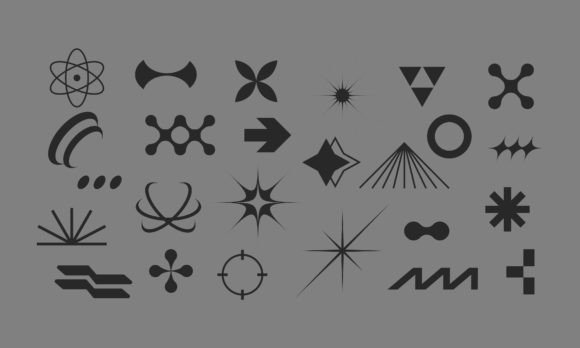
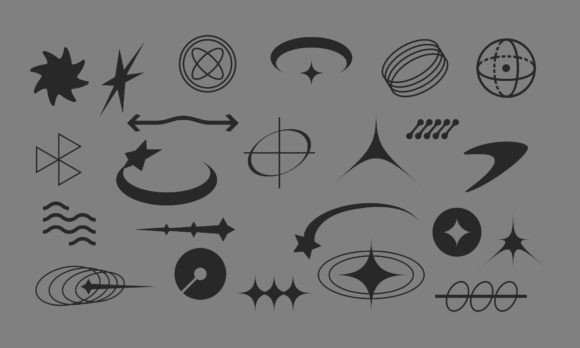
When you discover a set of Futuristic Abstract Vector Icons, featuring 24 unique, digitally-inspired elements, you are gaining access to a curated library designed to bridge the gap between functional interface design and artistic expression. Unlike generic clip art or flat symbols that often lack character, these abstract forms utilize complex geometry, vibrant gradients, and layered transparency to evoke the "Y2K" aesthetic while remaining perfectly suited for contemporary screens. For professionals ranging from web developers to brand strategists, understanding how to leverage these assets can significantly elevate the perceived value of a project.
The Power of Scalable Digital Assets in Branding
One of the most critical advantages of using vector-based graphics is their infinite scalability. In a world where content must be displayed on everything from smartwatches to massive billboards, resolution independence is non-negotiable. Futuristic Abstract Vector Icons solve the common problem of pixelation that plagues raster images when resized. Whether you need a tiny favicon for a browser tab or a hero image for a landing page, these icons maintain crisp edges and clean lines regardless of the output size.
This technical flexibility translates directly into time savings for busy freelancers and small business owners. Instead of creating multiple versions of an asset for different platforms, a single file serves all purposes. Consider a startup launching a new tech product; the ability to deploy high-quality branding across social media profiles, app interfaces, and marketing collateral without hiring a dedicated illustrator for every iteration streamlines the workflow considerably. The customizable nature of these vectors allows for quick adjustments in color schemes to match seasonal campaigns or rebranding efforts, ensuring consistency without the overhead of recreating assets from scratch.
Capturing the Early 2000s Aesthetic with Modern Precision
The early 2000s were defined by a distinct visual language: glossy textures, metallic sheens, neon accents, and abstract geometric shapes that suggested a high-tech future. Today, this style has evolved into a sophisticated design trend known as Y2K revival or retro-futurism. However, replicating this look authentically requires more than just applying a filter to a standard icon. It demands a deep understanding of the era's composition rules.
The collection of 24 unique elements found in these Futuristic Abstract Vector Icons is specifically engineered to tap into this nostalgia while adhering to current design standards. These digitally-inspired elements often feature the sharp angles and fluid curves characteristic of the turn-of-the-millennium graphic design scene. By integrating these icons into a modern website or app, designers can create a sense of familiarity and trust among audiences who grew up during that era, while simultaneously appealing to younger generations discovering the style for the first time.
For example, a music streaming service might use these abstract shapes to visualize audio waveforms or genre categories, instantly communicating a vibe that is both energetic and nostalgic. Similarly, a crypto-asset platform could employ these futuristic motifs to reinforce themes of decentralization and technological advancement. The key lies in selecting the right balance; too much retro styling can feel dated, but a strategic application of these abstract icons adds a layer of personality and depth that flat, minimalist designs sometimes lack.
Enhancing Communication Through Visual Storytelling
Effective design is about communication, and abstract imagery often conveys complex ideas more efficiently than literal representations. Futuristic Abstract Vector Icons excel at suggesting concepts like connectivity, data flow, innovation, and transformation without relying on clichéd symbols like lightbulbs or gears. This abstraction allows viewers to project their own interpretations onto the design, fostering a deeper emotional connection with the brand or message.
In the context of social media, where attention spans are short and visual impact is paramount, these icons can act as powerful anchors for content. A marketer creating a carousel post about the future of AI can use these abstract elements to break up text-heavy slides, guiding the reader's eye and reinforcing the narrative theme. The versatility of the set ensures that there is always a relevant shape or pattern available to support the specific point being made, whether it is illustrating network expansion or data encryption.
Furthermore, these icons support creativity by providing a foundation upon which designers can build unique compositions. Because they are vector-based, they can be manipulated, overlaid, and combined with other graphical elements to create entirely new visuals. This capability is particularly valuable for digital artists and hobbyists who wish to experiment with layout and typography. The ability to customize stroke weights, fill colors, and opacity levels means that the same icon can appear sleek and corporate in one context and vibrant and chaotic in another, depending on the desired outcome.
Practical Applications Across Industries
The utility of Futuristic Abstract Vector Icons extends far beyond the realm of tech startups. Educators creating digital course materials can use them to make presentations more engaging for students accustomed to dynamic visual media. Publishers designing e-books or interactive magazines can incorporate these elements to create chapter dividers or thematic headers that stand out on tablet screens. Even traditional industries like finance or healthcare are beginning to adopt these styles to humanize their digital presence and appear more innovative.
However, it is important to consider the fit before implementation. While these icons are versatile, they may not be appropriate for every brand identity. A law firm seeking to convey stability and tradition might find that the bold, futuristic aesthetic clashes with their core values. In such cases, it is wise to compare options and perhaps limit the use of these icons to specific digital touchpoints rather than the entire brand ecosystem. The goal is to enhance the user experience, not to confuse the audience with mismatched visual cues.
For those working in digital art projects, the limitations are few, but the possibilities are vast. Artists can use these 24 unique elements as building blocks for larger illustrations, combining them with hand-drawn textures or 3D renders to create hybrid artworks. The scalability ensures that these pieces can be printed on merchandise or displayed in large-format installations without loss of quality. This adaptability makes the set a cost-effective investment for anyone looking to expand their creative toolkit.
Streamlining Workflow and Decision Making
One of the hidden benefits of having a well-curated set of Futuristic Abstract Vector Icons is the reduction of decision fatigue. When designers face a blank canvas, the sheer number of choices can be paralyzing. Having a pre-designed collection of 24 cohesive elements narrows the scope of possibility, allowing creators to focus on composition and strategy rather than searching for individual assets. This efficiency is crucial for entrepreneurs and freelancers who must manage multiple projects simultaneously.
Moreover, the consistent style of the icons ensures that all visual communications within a project feel unified. There is no risk of mixing disparate styles that could dilute the brand message. This cohesion strengthens the overall presentation and simplifies the approval process with clients or stakeholders. When the visual language is clear and consistent, feedback becomes more focused on content and strategy rather than nitpicking design inconsistencies.
Ultimately, the value of these icons lies in their ability to merge form and function. They offer the aesthetic appeal of the early 2000s with the technical robustness required for today's digital environment. Whether you are revamping a personal portfolio, launching a new product, or simply exploring your creative potential, incorporating these scalable and customizable elements can provide the spark needed to bring your vision to life. By understanding their unique characteristics and applying them thoughtfully, you can create designs that are not only visually striking but also strategically sound.